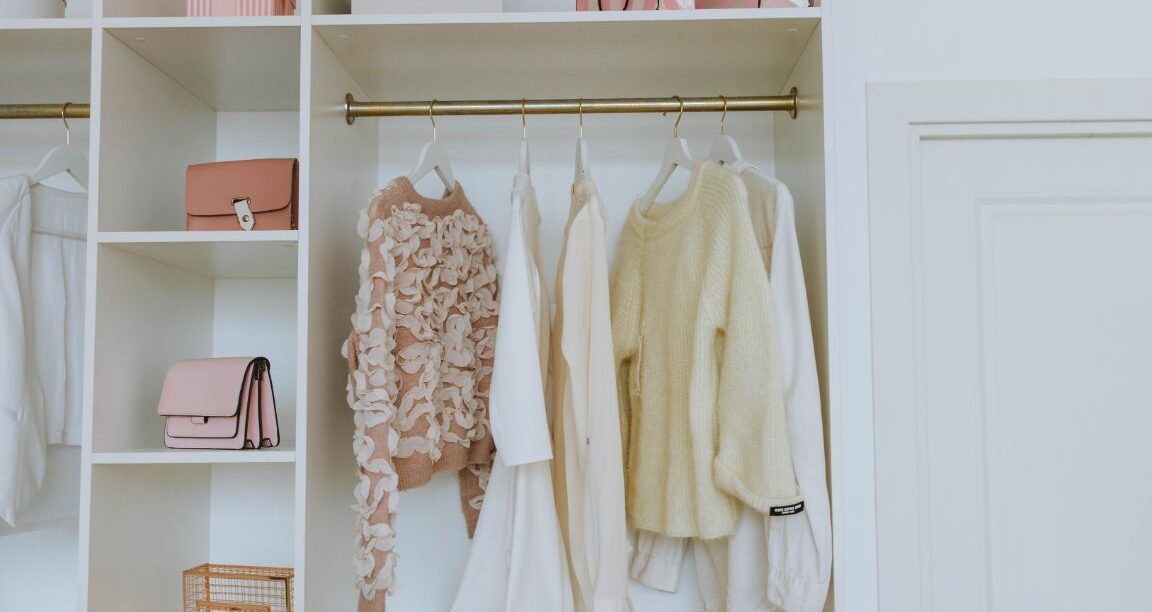
There’s a specific kind of frustration that comes from standing in front of a full wardrobe and feeling like you have nothing to wear. If that sounds familiar, the problem probably isn’t that you don’t have enough clothes. It’s that you have too many of the wrong ones.
A minimalist wardrobe isn’t about owning as little as possible. It’s about owning exactly what you need — pieces that work hard, fit well, and go with each other without effort. The goal is to open your wardrobe in the morning and feel calm instead of overwhelmed.
Here’s how to build one.
Start by Clearing Out, Not Adding In
Before you buy a single thing, take everything out. Every item. Lay it on your bed or floor and look at it honestly.
For each piece, ask three questions:
- Does it fit properly right now, not “when I lose a bit of weight”?
- Have I worn it in the last year?
- Does it make me feel good when I wear it?
If the answer to any of those is no, it goes. This part is uncomfortable but it’s the whole point. You can’t build a wardrobe that works around things that don’t.
The 12 Pieces
These aren’t rules — they’re a framework. The specific items will depend on your climate, your lifestyle, and what you actually do. But this structure works for most people.
Tops (4 pieces)
A white or cream fitted t-shirt is the foundation of almost every outfit. Get one in a quality cotton that holds its shape. A striped or neutral long-sleeve shirt gives you a second option with slightly more character. A lightweight knit or fine-gauge sweater bridges the gap between casual and put-together. A button-down shirt — linen in warmer climates, cotton poplin everywhere else — handles anything that requires a little more effort.
Bottoms (3 pieces)
One pair of well-fitting jeans in a mid or dark wash. Not skinny, not baggy — just well-fitted to your body. A pair of tailored trousers in a neutral (black, navy, or camel) that can go from a nice lunch to a work meeting without fuss. A casual short or lightweight trouser for warmer days.
Layers (2 pieces)
A blazer or structured jacket in a neutral that works over everything. This is your single most transformative piece — it makes any outfit look intentional. A lightweight jacket or overshirt for more casual days or variable weather.
Shoes (3 pairs)
Clean white or neutral sneakers that go with everything casual. A leather or leather-look loafer or low heel that elevates an outfit without being uncomfortable. A sandal or open shoe for warm weather.
That’s it. Twelve pieces, endless combinations.
The Neutrals Rule
The reason capsule wardrobes work is neutrals. When everything you own is in a similar colour family — white, cream, black, navy, grey, tan, camel — everything goes with everything else. You never get stuck with a top that only works with one pair of trousers.
Pick your neutral base and stick to it. If you love warm tones, build around cream, camel, and tan. If you prefer cooler tones, go white, grey, and navy. Either works. Mixing warm and cool neutrals is where things start to clash.
One accent colour is fine. One. A dusty rose bag, a terracotta scarf, an olive jacket. Accent pieces add personality without breaking the system.
Quality Over Quantity — But Realistically
You don’t need to spend a fortune. You do need to stop buying things that fall apart after three washes.
The test: pick up a garment and tug it gently. Feel the weight of the fabric. Check the seams at the shoulders and armpits. Look at the stitching around the buttons. These are the areas that fail first on cheap clothes.
It’s better to own three t-shirts that last three years than ten that need replacing every six months. The maths — and the environmental impact — work out significantly better.
Maintaining It
A minimalist wardrobe requires maintenance. When something new comes in, something old goes out. Not as a rigid rule, but as a habit of mind. Every few months, do a smaller version of your original clear-out. Things wear out, your life changes, your taste evolves. Keep the wardrobe current.
The payoff is real. Getting dressed becomes faster, easier, and more consistent. You stop wasting mental energy on clothing decisions. And everything you own, you actually wear.
That’s the whole point.